Visual Merchandising: A Practical Guide for South African Small Businesses
Learn how visual merchandising can attract customers, improve product visibility, and increase sales. Practical tips for South African shops, salons, spaza shops, and market stalls.
Table of Contents
- Introduction
- What is visual merchandising?
- Why visual merchandising matters for SA small businesses
- The core principles of visual merchandising
- Layout and customer flow
- Product display and grouping
- Lighting, colour and signage
- Brand consistency
- Visual merchandising mistakes to avoid
- How to apply visual merchandising in your business
- For shops and salons
- For spaza shops and informal retailers
- For market stalls and pop-ups
- For online stores
- Refreshing your displays through the year
- Measuring whether your visual merchandising is working
- Getting started with visual merchandising in your business
Two shops selling the same products. One has a clear, well-lit display in the window, products grouped by how a customer would think about buying them, and pricing that's easy to read. The other has stock piled wherever it fits, signs in different sizes that are hard to read from a distance, and a window display that hasn't changed in months. A customer walking past both will slow down at the first one. They probably won't even notice the second.
That's visual merchandising at work. It's not about having a big budget or a fancy fit-out. It's about being intentional with how your products are presented, and understanding that every customer makes a decision about your shop before they've even walked in.
This guide covers what visual merchandising is, the principles behind it, and how SA small business owners can apply it across shops, salons, spaza shops, market stalls, and online stores.
What is visual merchandising?
Visual merchandising is the practice of arranging your products, displays, signage, lighting, and overall store environment to attract customers, communicate what your business is about, and encourage people to buy. It covers everything a customer sees, from your window display to the way products are grouped on a shelf to the price tag on an individual item.
It's not just for large retailers. The same principles that work in a mall store work in a spaza shop, a market stall, and an online store. They just look different at different scales.
Why visual merchandising matters for SA small businesses
In South Africa, small businesses often compete directly with large retailers who have dedicated visual merchandising teams. Getting your visual merchandising right is one of the most affordable ways to compete.
When it's done well:
- More customers stop and come in rather than walking past
- Customers spend more time browsing, which means more chances to buy
- Customers tend to buy more when products are grouped and displayed in a way that makes additional items easy to notice
- Your business leaves a stronger impression, which brings people back
Whether you're in a busy township, on a high street, or at a weekend market, the way your products look is part of what makes you worth stopping for.
The core principles of visual merchandising
You don't need to study retail design to apply these principles. You just need to understand what they are and start using them consistently.
Layout and customer flow
The way customers move through your space affects what they see, what they pick up, and what they buy. A few things worth knowing:
- The area just inside your entrance is called the decompression zone. Customers are still adjusting when they walk in, so they tend to walk past whatever is placed right at the door without really seeing it. Your best displays belong a few steps inside, where attention kicks in.
- Focal points are the spots in your store that draw the eye naturally - the end of an aisle, the centre of a wall, the space directly opposite the entrance. These are where your strongest products or best displays should live.
- Sight lines matter too. If customers can't see across your store from the entrance, they don't know what's worth exploring. Keep shelving at a height that lets people see the space beyond it.
In practice: a spaza shop can put high-margin items at eye level near the till, where every customer ends up. A salon can position retail products where clients sit during their treatment, not just at reception where they're in a hurry to leave.
For more on practical ways to drive retail sales alongside your displays, read 12 Ways to Boost Your Holiday Retail Sales.
Product display and grouping
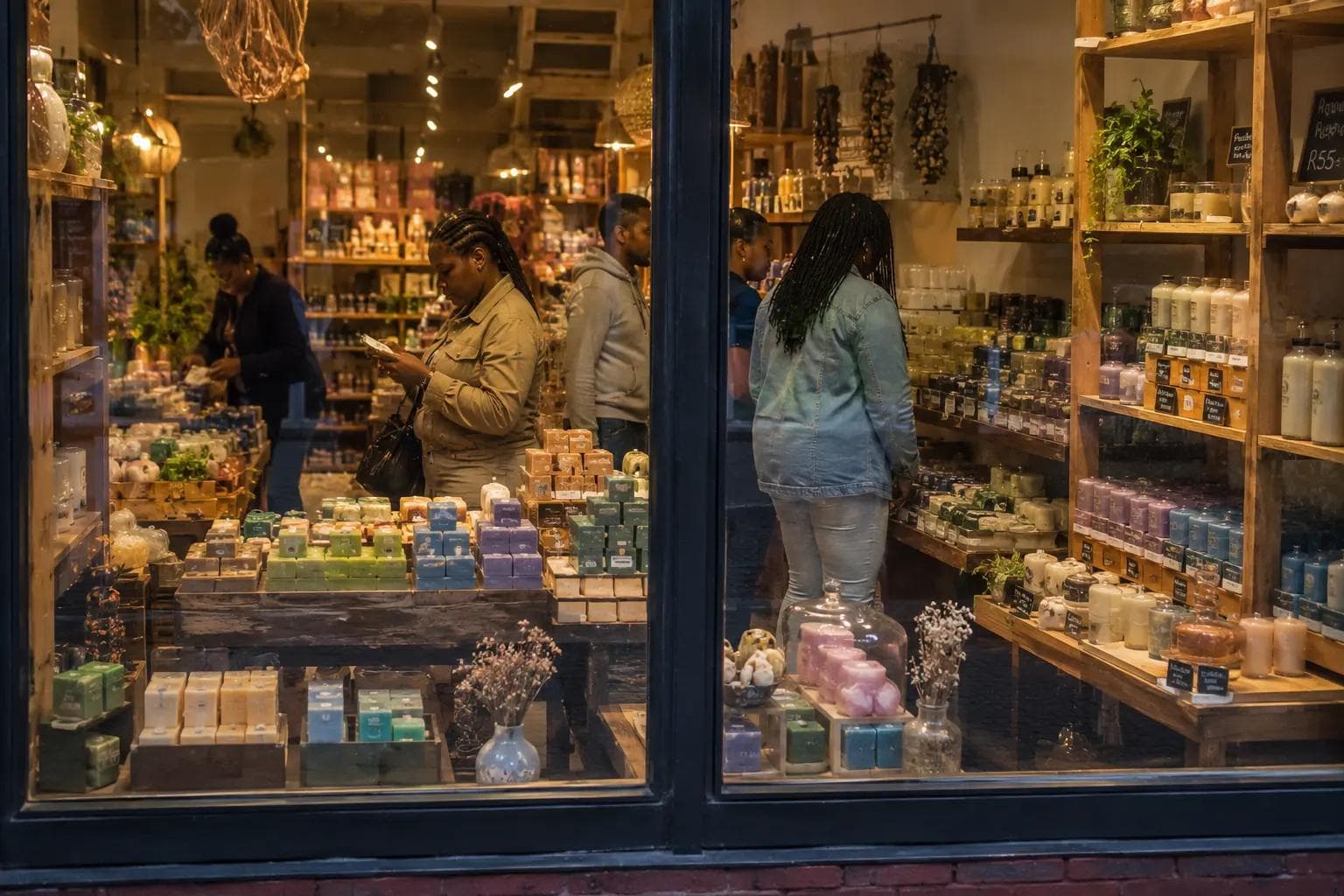
Products that are grouped together sell together. Organise your displays by theme, colour, or use case rather than just by category. A skincare range displayed together as a routine sells better than the same products spread across different shelves.
A few techniques worth using:
- The rule of three - grouping products in odd numbers tends to look more natural and balanced than even groupings. Three different sizes of the same product, or three complementary items displayed together, is more visually appealing than two or four.
- Pyramid arrangements - place taller items at the back and shorter ones at the front. This creates a natural visual flow that's easy on the eye and lets customers see everything in the display.
- Focal displays - a single standout display that anchors a section of your store and draws customers toward it. This doesn't have to be elaborate. A well-lit shelf with three products and a clear sign can do the job.
One important note: placing popular products deeper in the store draws customers through the space, which means they see more of what you sell on the way.
Lighting, colour and signage
Lighting changes how products look and how a space feels. Warm lighting tends to make a space feel welcoming and works well for clothing, beauty products, and food. Cooler lighting feels clean and precise, which suits electronics, pharmacies, and health products.
Accent lighting on a specific display, even a small spotlight or a strip of LED lighting, draws the eye and makes those products feel more considered. If your store has uneven lighting or a section that feels dim, that's usually where sales are weakest.
For businesses in areas where power supply isn't always consistent, battery-powered display lights and LED strip lights are worth the small investment. They keep your key displays looking their best regardless of what's happening with the power.
Clear, readable signage makes a real difference in SA retail. Price tags in different sizes and styles, faded promotional posters, and signs that are hard to read from a distance all make it harder for customers to engage with your products. Every product should have a visible price, and every promotion should have a sign a customer can read at a glance.
Brand consistency
Your visual merchandising should reflect your brand, not contradict it. If your brand uses specific colours, those colours should show up in your signage, your price tags, and your display materials. If your brand has a particular feel - premium, playful, practical - your displays should reinforce that feeling.
A business that sells handmade goods shouldn't necessarily use the same display style as a pharmacy. The presentation should match what you're selling and who you're selling it to. For more on building a brand identity that your visual merchandising can reinforce, read A Guide to Branding a Small Business.
Visual merchandising mistakes to avoid
Even small things can make a big difference to how customers experience your store. Here are some of the most common things worth keeping an eye on:
- Cluttered counters and shelves - when too many products compete for attention, nothing stands out. Try editing your displays down to the products you most want to sell and see what changes.
- Missing or unclear pricing - if a customer can't find the price, they often won't ask. They'll just move on. Every product needs a visible price.
- Dirty or dusty displays - a product sitting in a dusty display is easy to overlook. A quick wipe-down of your displays, especially in high-traffic areas, goes a long way.
- Dim lighting - if customers can't see your products clearly, they're less likely to pick them up. Check every section of your store and brighten up the dim spots where you can.
- Blocked sight lines - shelving or stock that blocks the view across your store makes the space feel cramped and hides products from customers who might have bought them.
- Too many promotions at once - when everything is highlighted, nothing is. Choose your key promotions and give them room to stand out.
- A neglected entry zone - the space just inside your entrance is where the first impression is made. Keep it clear, welcoming, and focused.
How to apply visual merchandising in your business
For shops and salons
Start with your window or entrance display. This is what stops a customer on the street or in a mall corridor. It should be clean, well-lit, and focused on one clear message - a new product, a seasonal offer, or your best-selling range.
Inside, group your products into clear zones. A clothing shop might organise by occasion or by colour. A beauty shop might group by brand or by skin type. The goal is for a customer to be able to find what they're looking for without having to ask.
Keep your counters clear. The space around your till is valuable selling space - a small, focused selection of add-on products works better there than admin clutter.
For salons specifically: retail products placed where clients sit during a treatment tend to sell better than products placed only at reception. A client sitting under a dryer for 20 or 30 minutes has time to browse. Put your products where they can actually see and reach them.
For spaza shops and informal retailers
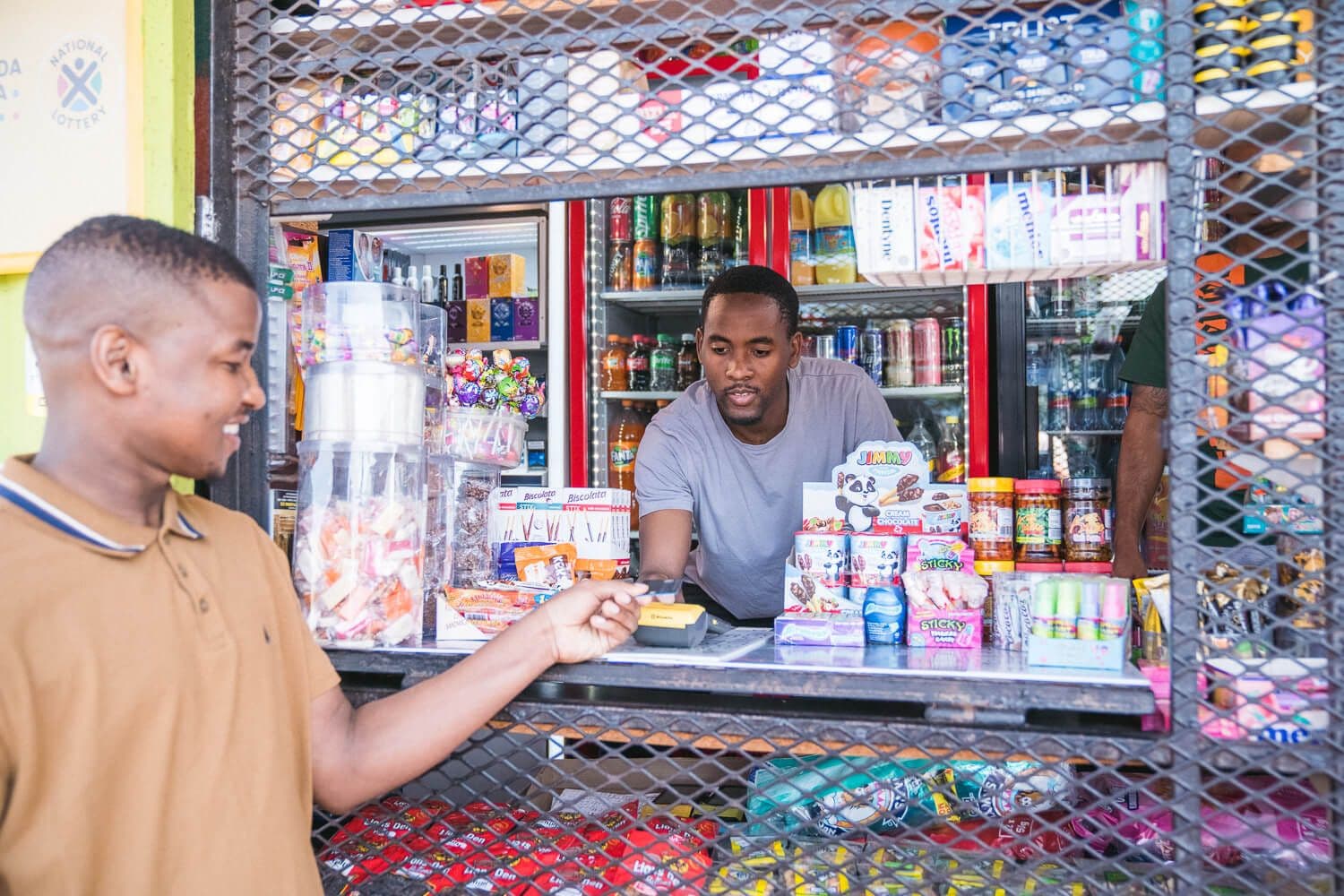
Visual merchandising at a smaller scale is mostly about organisation and placement. Group your stock by category so customers can find what they're looking for quickly. Place your highest-margin items at eye level, where they get seen first. Keep the front of your displays clean and facing forward.
Clear signage goes a long way. A visible price board, a legible special offer, and product names that customers can read from the pavement are all forms of visual merchandising that cost very little but make a real difference.
For more on running a successful spaza shop, read How to Start and Grow a Spaza Shop.
For market stalls and pop-ups
At a market stall, you have seconds to catch someone's attention as they walk past. A few things that help:
- Use tiered display stands to create height and visual interest. A layered display lets customers see everything at once, which a flat table of products doesn't.
- A branded tablecloth or backdrop makes your stall look intentional and helps customers remember you the next time they see you.
- Choose one standout product or display to anchor your stall - something that catches the eye from a distance and gives people a reason to stop.
- Make sure your prices are easy to read. Customers at markets are often browsing quickly, and unclear pricing is one of the most common reasons they move on without buying.
- If you want to accept card payments without cluttering your display, iK Tap on Phone lets you take card payments directly on your Android smartphone, keeping your setup clean and your display front and centre.
For online stores
Visual merchandising applies online too, just in a different form. Your product images are your displays. Lifestyle photography, showing products in use and in context, tends to perform better than flat product shots on a plain background.
Group your products into clear categories that make sense to someone browsing. Use a consistent style across all your product images so your store feels considered.
You don't need expensive equipment. A well-lit phone photo against a clean, consistent background is often enough. Natural light, a simple backdrop, and a tidy frame are a good place to start.
Refreshing your displays through the year
A display that never changes stops being noticed. Customers who visit regularly will walk past it without really seeing it after a few weeks. Building a simple display calendar into your routine gives you a reason to feature different products throughout the year and keeps your store feeling like there's always something new.
SA retail has a clear calendar of moments worth planning around:
- January - back-to-school
- March/April - Easter
- May - Mother's Day
- June - mid-year sales and winter ranges
- September - Heritage Day and spring
- November - Black Friday
- December - year-end and holiday gifting
You don't need a full redesign for each of these. A changed window display, a new focal point, or updated signage is enough. The goal is simply to give your regular customers a reason to look again.
Measuring whether your visual merchandising is working
You don't need any special tools to know if your displays are doing their job. A few simple things to pay attention to:
- Which displayed products are actually selling - if a product is featured prominently but not moving, try a different placement or swap it out for something else.
- Whether more people coming in leads to more sales - if you're getting more foot traffic but sales aren't going up, customers are looking but not buying. Check your product groupings and whether your pricing is easy to find.
- What customers tell you - ask. A simple "did you find everything you were looking for?" goes a long way. If customers regularly can't find something, your layout or signage might need a tweak.
- How long people stay - customers who spend more time in your store tend to buy more. If people are coming in and leaving quickly, your layout may not be drawing them through the space.
- How often regulars come back - if your regular customers are visiting more frequently, something is working. If they're not, it's worth looking at whether the store feels fresh and inviting.
Getting started with visual merchandising in your business
Getting your visual merchandising right isn't a once-off project. It's something you build on over time - a display you tidy up, a product you move, a sign you make easier to read. Each small change adds up.
You don't need a big budget to make a real difference. Start with one display this week. Clean it up, add some lighting if you can, group the products so they make sense together, and make sure everything has a clear price. Then watch what happens when the next customer walks past.
iKhokha is here to support SA small businesses at every step - from taking payments to managing stock to helping you understand what's selling and what isn't.