Why Better Website Payments Matter for Online Growth
Learn why better website payments matter for online growth, from customer trust and payment confidence to a smoother, more professional online buying experience.
BY Yolisa Motha
Table of Contents
- Introduction
- Turning online interest into real sales
- How do online payments work on a website?
- Payment gateway or payment links: which works for your business?
- What customers expect when paying online
- Payment methods they recognise
- Clear pricing without surprises
- A checkout that feels safe and straightforward
- What can stop customers from completing a payment?
- Choosing a payment setup that can grow with your business
- Growing your website with iK Pay Gateway
- Make it easier for customers to buy from you
Getting people to visit your website is exciting. You've spent time choosing the right product images, writing descriptions and sharing your business online. Now people are finding you, browsing your products and showing interest in what you sell.
But getting visitors to your website is only half the job. The next step is making it easy for them to buy.
Whether you're running a small online shop or growing an established business, the way you accept payments can make a difference to how smoothly things run. A straightforward checkout gives customers fewer reasons to abandon their orders and saves you time managing payments manually.
Let's look at how website payments work, what customers expect when paying online and how the right setup can help your business grow.
Turning online interest into real sales
Imagine someone browsing your website at 9 PM on a Saturday. They've found something they like, added it to their cart and they're ready to buy.
But when they get to checkout, they're asked to make a manual EFT and email you proof of payment.
They might go through with it. Or they might decide to come back later, get distracted and forget about the purchase altogether.
Manual payments can work when you're starting out, especially if you're selling to people you already know. But as orders increase, checking payments and following up with customers can quickly become another job on your to-do list.
Accepting payments directly through your website makes things simpler. Customers can complete their purchases when they're ready, without waiting for you to send banking details or confirm their payment manually.
And for you, that means less time chasing payments and more time focusing on your business.
How do online payments work on a website?
When a customer buys something online, they need a way to pay without handing over cash or visiting a physical store.
That's where an online payment gateway comes in.
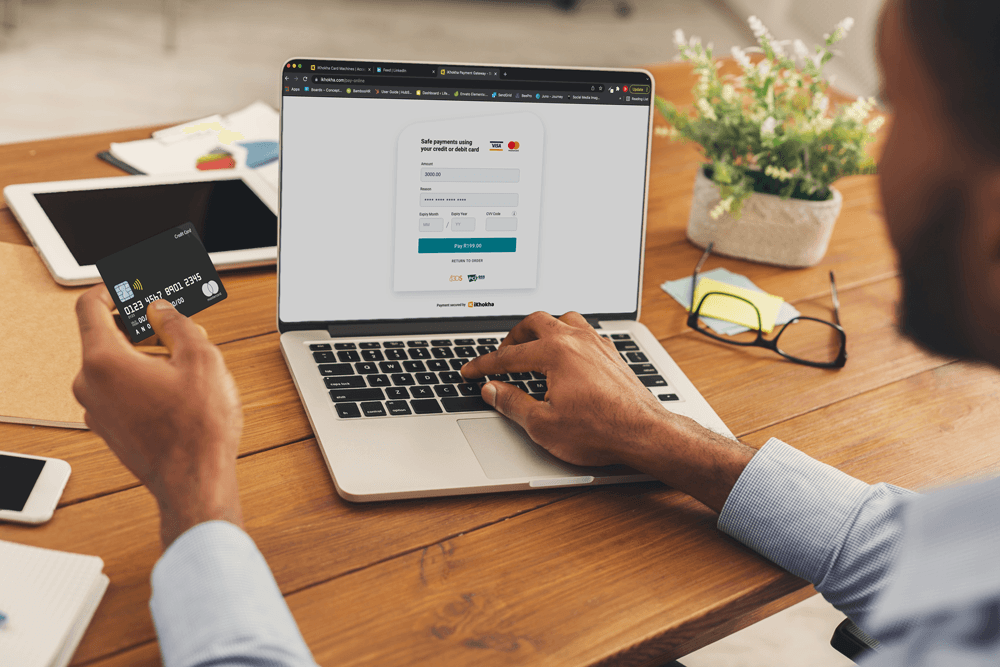
A payment gateway connects your website's checkout to the payment process, allowing customers to choose a payment method and complete their purchase securely.
Here's what typically happens:
Your customer places an order. They add products to their cart and head to checkout.
They choose how to pay. Depending on the payment options available, they might use a bank card, Instant EFT or a digital wallet.
The payment is processed. The payment provider securely handles the transaction and returns a result.
The customer receives confirmation. They can see whether their payment was successful, and you can manage the order accordingly.
Instead of checking bank transfers individually, you have a more straightforward way to accept payments through your website.
Payment gateway or payment links: which works for your business?
Not every small business sells through a website, and that's perfectly fine.
If you have an online store, a payment gateway allows customers to pay as part of the checkout process.
But what if most of your customers order through WhatsApp, social media or email?
That's where payment links can help. You can send customers a secure link to complete their payment without needing an online store.
Both options help you accept payments online. The difference comes down to how you sell.
A payment gateway makes sense when customers shop directly on your website, while payment links are useful when you deal with customers individually.
What customers expect when paying online
Think about the last time you bought something online. Before entering your payment details, you probably checked a few things without even realising it.
Was the website legitimate? Could you use your preferred payment method? Was the delivery fee clearly shown?
Your customers are asking themselves the same questions.
Payment methods they recognise
Not everyone wants to pay the same way.
Some shoppers prefer using their bank cards, while others choose Instant EFT or digital wallets like Apple Pay and Google Pay.
If customers reach checkout and can't find a payment method they're comfortable using, they may leave without completing their purchase.
Offering a choice of familiar payment methods can make checkout easier for more customers.
Clear pricing without surprises
Nobody enjoys getting to the final step of a purchase only to discover an unexpected delivery fee.
Make sure customers can see what they're paying for, including delivery charges and VAT where applicable, before they complete their purchase.
The fewer surprises there are at checkout, the easier it is for customers to make a decision.
A checkout that feels safe and straightforward
Customers want to know their payment details are being handled securely.
A checkout that loads properly, explains what to do next and clearly confirms the payment result can help put their minds at ease.
It's also worth checking how your website performs on mobile. If customers struggle to enter their details or complete a payment on their phones, you could be losing sales unnecessarily.
What can stop customers from completing a payment?
Even when someone wants to buy your product, a frustrating checkout experience can get in the way.
Sometimes it's something obvious, like a payment page that doesn't load. Other times, it's a small inconvenience that makes someone decide the purchase can wait.
A few things worth checking on your website include:
- Too many steps: Can customers complete checkout without filling in unnecessary information?
- Limited payment options: Are you offering ways to pay that your customers actually use?
- Unexpected costs: Are delivery fees and other charges clear before payment?
- Confusing payment confirmations: Do customers know whether their payment went through?
- Mobile checkout problems: Is the process just as easy on a phone as it is on a computer?
You don't need an elaborate website to get these basics right.
Try completing a purchase on your own website as though you're a first-time customer. You might spot something that's easy to overlook when you already know how everything works.
Choosing a payment setup that can grow with your business
The way you accept payments when you're making five sales a week might not work as well when you're handling fifty.
As your business grows, you'll want a payment setup that makes it easier to manage more orders without creating extra admin.
If you're comparing payment gateways for your small business, here are a few things worth considering.
Website compatibility
Check whether the payment gateway works with the platform you're using, whether that's WooCommerce, Wix or another website builder. A supported integration can make getting started much simpler.
Payment methods
Think about how your customers prefer to pay. Offering more than one payment option can help you accommodate different preferences.
Transaction fees and payouts
Understand what you'll pay per transaction and how long it takes for money to reach your account. This makes it easier to plan your costs and manage cash flow.
Payment reporting
Being able to check successful, failed and pending payments can make it easier to manage orders and follow up when something goes wrong. Check what reporting tools your payment provider offers.
Local support
If something goes wrong, you'll want to know where to get help. Having access to support that understands South African businesses and payment processes can be useful.
Your payment setup is only one part of running an online business. If you're looking at the bigger picture, our guide to creating an online business strategy covers other areas worth planning for as you grow.
Growing your website with iK Pay Gateway
If you're ready to start accepting payments through your website, iK Pay Gateway gives your customers a way to pay online without having to send you a separate EFT.
It's designed for South African businesses that want to accept website payments while keeping the checkout process straightforward.
iKhokha offers a payment gateway for South African businesses that supports popular ecommerce platforms, including Wix, WooCommerce, Shopstar and Savvy. If you have a custom-built website, you can also explore integrating through the iK Pay API.
Your customers can pay using cards, Instant EFT, Apple Pay or Google Pay, giving them a choice of familiar payment methods at checkout.
Before choosing a payment provider, it's also worth comparing transaction fees and payout times. You can find iKhokha's latest online payment rates to help you understand what accepting payments online could cost your business.
Make it easier for customers to buy from you
Getting people to visit your website is a great start, but you also need to make it easy for them to buy.
That means offering payment methods they recognise, showing the full cost upfront and making sure they know when their payment has gone through.
If you're still relying on manual EFTs or checking proof of payment emails, it might be time to look at a payment gateway that works with your website.
It's one less thing to manage yourself, and one less obstacle between your customers and their next purchase.