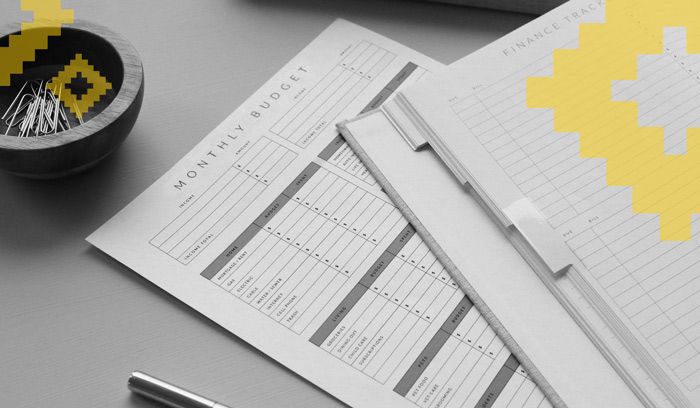
8 Money Management Tips for South African Small Business Owners
Learn 8 practical money management tips to budget better, manage cash flow, save for quiet months, and avoid high-interest debt, made for small businesses in South Africa.
BY Sarah Heron
Table of Contents
- Introduction
- 1) Money management starts with a budget that works
- 2) Cash flow vs profit: know the difference
- 3) Save first, spend later
- 4) Use credit as a tool, not a crutch
- 5) Track every rand to cut waste
- 6) Stay on the right side of SARS
- 7) Diversify your income
- 8) Price properly, or you’ll stay busy and still feel broke
- Make money management a weekly habit
Managing money is one of the hardest parts of running a small business in South Africa. Some months are busy-busy, other months are quiet, and if you aren’t watching where every rand goes, things can spiral quickly. It’s not always because the business is failing. Sometimes it’s just because money comes in late, costs creep up, or you’re making decisions without a clear view of your numbers.
You don’t need a fancy accounting degree to get this right. You just need to see your money clearly, what comes in, what goes out, and what must be paid first. That’s how you keep the business steady and work towards your goals, even when sales go up and down.
This guide covers everyday money management tips to help you create a budget, build an emergency fund, use credit without getting trapped by high interest, and make calmer decisions because you actually understand your cash.
1) Money management starts with a budget that works
A budget isn’t a cage. Think of it like a map - it doesn’t tell you what to do, it shows you where you are, so you can choose the best route.
In South Africa, that map matters because costs don’t stay still. Petrol goes up, electricity gets expensive, data disappears faster than you planned, and suppliers don’t always keep prices stable. A budget helps you plan for real life, not a perfect month that never happens.
Open your banking app and look at the last three months of transactions - the good, the bad, and the 'why did I buy that? If you’ve got financial statements, even basic ones, that’s helpful too. Then split your spending into two groups:
- Must-pays: rent, staff, bank charges, data, insurance, stock you can’t trade without
- Sneaky costs: repairs, licence renewals, delivery fees, the month where school holidays slow everything down
Next, plan your month the same way you plan your stock - don’t just list costs. Decide when they will hit. Month-end rent is one thing. A supplier payment due in 7 days is another. Timing can be the difference between feeling in control and feeling like you’re always catching up.
If you want a quick way to do this without living in spreadsheets, tools like iK Accounting can help you keep income and expenses together in one place, so you can pull a clean view when you need it.
2) Cash flow vs profit: know the difference
Profit is what’s left after costs on paper. Cash flow is what’s actually in your business account when bills are due. You can be profitable and still feel broke if cash comes in late.
Say you finish a big job today, but the client only pays in 30 or 60 days. Meanwhile, rent is due tomorrow, suppliers want their money, and staff still need to be paid. That gap is where most SA small businesses get stuck. You aren't failing; you're just waiting. But your landlord isn't waiting for his rent.
A few small habits make this easier:
- Invoice immediately when the work is done
- Follow up early on late payments (before it becomes a fight)
- Know what’s due next week, not just “sometime this month”
- Build a buffer, even if it starts small
That buffer is your emergency fund. And no, it doesn’t need to be huge at first. If you can build enough to cover even one week of basics, you’ll feel the pressure drop. Over time, aim for one month of your must-pays.

3) Save first, spend later
Most people try to save what’s left at the end of the month. Usually, nothing is left. A better approach is “pay yourself first”, even if it’s a small amount.
Try take 5% of sales and move it out of your day-to-day spending account. That’s it. Don’t overthink it. You’re building a habit and a buffer.
You can keep that money in a business savings account, or even an investment account if you don’t need to touch it quickly. The point is: separate it, so it doesn’t get swallowed by daily spending.
Saving helps in a few real ways:
- it protects you when a fridge breaks, a tyre goes, or a supplier suddenly wants cash upfront
- it helps you avoid panic credit
- it gives you options to save or invest when the time is right
A savings goal also helps. “Save money” is too vague. “Save R5,000 for a new freezer” is clear. When the goal is clear, it’s easier to say no to spending that doesn’t help the business.
4) Use credit as a tool, not a crutch
Credit is like fire. It can cook your food or burn your house down. In business, if you use a credit card to pay for data or petrol every month because you’re out of cash, you’re digging a hole.
Credit cards and loans are not extra money. They are borrowed money, and you pay for it through interest rates. If the interest is high, it doesn’t just “cost you a bit”. High interest can eat your profit margins faster than you can earn them back.
Before you use credit, ask yourself: what is this money actually doing for the business?
If it’s going to buy stock you know will sell quickly, credit might make sense. If it’s going to cover a gap because money is leaking, credit won’t fix the real problem.
A few rules that keep you safe:
- keep credit use below 30% of your limit where possible
- pay on time, every time
- avoid using credit for day-to-day running costs month after month
If a traditional loan doesn’t suit your business, there are other options. For iKhokha merchants, iK Cash Advance is one way to access working capital based on actual sales. Still, the rule stays the same: understand the payback plan before you sign anything.
5) Track every rand to cut waste
When you don’t track spending, money disappears quietly. Not in one big way. In small ways. A subscription you forgot about. Bank charges you never questioned. Extra delivery trips because stock wasn’t planned properly.
Tracking doesn’t need to be complicated - you’re not aiming for perfect books here, you’re just trying to stop guessing.
Start with a simple rhythm:
- record money in and money out daily or weekly
- check spending categories once a month
- review costs properly every six months
This is where tools can really help. The iK Dashboard can show card payments and sales trends, and iK Accounting can help you keep income and expenses organised so tax time isn’t a scramble.
Once you can see what’s happening, you can make small fixes that save a lot, and those small savings add up, and you feel it quickly.
6) Stay on the right side of SARS
Tax isn’t anyone’s favourite topic, but ignoring it until later usually ends in stress. The simplest way to stay safe is keeping records tidy from day one.
If you want a simple system, focus on three things:
- keep every receipt (even petrol and stationery)
- keep invoices and proof of payment together (yes, even the EFT proof)
- store it in one place, digital folder or paper file, just one place
Make sure your business is registered correctly with CIPC and SARS. If you’re VAT-registered, set reminders for deadlines so nothing sneaks up on you.
A part-time bookkeeper or tax practitioner can be worth it, especially if it helps you claim deductions you didn’t know existed. You don’t need perfect records - you just need them organised enough that SARS doesn’t become a panic.
7) Diversify your income
One of the safest ways to protect a small business is to have more than one way to bring money in. If one side is quiet, another side can help carry you.
Sometimes this is as simple as getting paid in more ways:
- sell value-adds that customers already ask for
- accept payments wherever you are
- make it easy for customers to pay remotely
With iKhokha, that can look like:
- selling prepaid products like airtime, data, or electricity using iK Prepaid
- using iK Tap on Phone to accept payments anywhere
- sending iK Pay Links to customers who aren’t in front of you
You don’t need to do everything. Pick one option that fits your customers, then build from there.
8) Price properly, or you’ll stay busy and still feel broke
If you’re the cheapest in town, you might stay busy. But being busy isn’t the goal, profit is. And if your prices haven’t changed since 2023, while electricity, petrol, and supplier costs have all gone up, your profit is probably getting squeezed without you noticing.
So don’t just guess what to charge. Do a quick sanity check:
- What it costs you (COGS): what you paid to buy it or make it
- The extra costs: your time, your data, petrol to fetch stock, packaging, delivery
- What’s left after everything: enough to cover bills and still grow the business
Putting prices up can feel scary, especially when money is tight for everyone in SA. But it’s better to have 10 customers paying a fair price than 20 customers keeping you flat out for almost nothing.
Make money management a weekly habit
Money management is a habit, not a once-off chore. A simple system and a regular check-in will take you further than trying to fix everything in one go.
When you know your numbers, you stop surviving from one week to the next. Decisions get calmer. Planning gets easier. And you can build something that lasts, even when business is tough.
When you know how to manage money, every rand you earn moves your business closer to long-term success.
FAQs: How to manage money in a small business
Related Articles




Most recent articles
View all
8 Common Stock Mistakes SMEs Make (And How to Fix Them)
Business Ideas in Rural Areas in South Africa

Holmes Brothers: From Garage Chaos to a South African Surf-Lifestyle Brand

5 Modern Business Ideas for Women in South Africa

Low-Risk Business Ideas That Bring Steady Work

12 Unique Business Ideas in South Africa for 2026

8 Money Management Tips for South African Small Business Owners

How to Open a Bar in South Africa: Your Complete Step-by-Step Guide

5 Business Management Must-Haves for an Investable Business

How to Start a Gardening Business in South Africa

5 Time Management Tips for Better Business Management

How to Start a Cleaning Business in South Africa

A different way to live: This is Kico Life

How to Launch an Online Store in Just 3 Steps

How to Start a Car Wash Business in South Africa

Making the Leap: The Website-Free Way to Sell Online

How to Start a Laundry Business in South Africa