How to Start a Cleaning Business in South Africa
Learn how to start a cleaning business in South Africa, from choosing your services and pricing to finding clients, managing costs and getting paid with iKhokha.
Table of Contents
- Introduction
- Why cleaning services are in demand in South Africa
- How to start a cleaning company in South Africa
- A practical way to get started with your cleaning business
- Choose the type of cleaning that makes sense for you
- Choose a name that people can remember
- When should you register your cleaning business?
- Put together a starter kit
- Set pricing that makes sense
- Keep your standards consistent
- Make it easy for people to book you
- Make your quotes simple and to the point
- Use payment and booking tools that make your day easier
- Plan your day so it doesn’t run you
- Keep track of your money from the start
- Professionalism starts before you walk through the door
- Add help when the work becomes too much for one person
- Realistic costs of starting a cleaning business
- A simple month to get yourself moving
- Week 1
- Week 2
- Week 3
- Week 4
- What new cleaners usually learn the hard way
- Charging too little at the start
- Saying yes to everything
- Not being clear about what you’re actually offering
- Skipping the small check-ins
- Pushing your body harder than you realise
- How to turn once-off cleans into regular clients
- Bringing it all together
So, you’re thinking about how to start a cleaning business in South Africa, or maybe even turn your work into a proper cleaning company over time. Most people who get into this line of work don’t start with much. A few solid cleaning products, a bucket, and the willingness to take paid jobs when they come your way is often enough in the beginning. Plenty of cleaners in Mzansi start out this way and grow steadily once word gets around.
If the idea has been sitting at the back of your mind, this article will help you get a clear sense of what the work actually involves. We’ll look at the basics you need, how people usually get their first clients, how pricing works and the simple admin that keeps everything running smoothly.
Why cleaning services are in demand in South Africa
If you look around, there’s always a place that needs a proper clean. Family homes, shared flats, offices after hours, even the Airbnbs that need to be flipped before the next guest arrives. People are busy, and they’re willing to pay someone who shows up, works neatly and doesn’t cut corners.
In South Africa, cleaning businesses grow because of something straightforward. When you do solid work, people remember you. They call you back. They pass your number to the body corporate chairperson, their neighbour, their cousin with a rental unit, whoever needs help next. It’s not fancy. It’s just how word of mouth works here.
How to start a cleaning company in South Africa
To start a cleaning company in South Africa, choose the type of cleaning you want to offer, put together a basic starter kit, set clear prices, find your first clients and keep proper records from the beginning. You can start small as a cleaner or sole proprietor, then register a cleaning business later if you want to work with offices, estates, agencies or bigger clients.
Most cleaning companies start with simple jobs: home cleaning, move-in or move-out cleans, Airbnb turnovers, small offices or once-off deep cleans. The important part is to build trust early. Arrive on time, be clear about what’s included, and give people a reason to book you again.
A practical way to get started with your cleaning business
You don’t have to build a big company plan before you start cleaning. It helps to break things into simple decisions, especially in the beginning, so you know where to put your energy.
Choose the type of cleaning that makes sense for you
Cleaning covers a lot of ground, so it helps to pick one area to focus on at first. Most people decide based on what they can afford, where they live and how they plan to move around.
Here are the most common starting points:
- Home cleaning for flats, complexes and houses. Steady work and lots of referrals.
- Move-out or move-in cleaning for tenants and landlords. More physical work, higher fee.
- Airbnb turnovers with tight timelines and predictable repeat bookings.
- Small office cleaning in the evenings when staff leave.
You can always add extras later like carpets, ovens, windows or deep cleans, but start with one lane so you can build a routine and get known for something specific.
Choose a name that people can remember
Pick something short, friendly and easy to share on WhatsApp. Run it past a few people you trust, then do a quick online search to make sure no one nearby is using it already.
When should you register your cleaning business?
You don’t always need to register a company before taking your first cleaning job. Many cleaners start small, test demand, and build a few regular clients before making the business more formal.
Registration becomes more useful when you want to quote for bigger jobs, work with offices or body corporates, open a business bank account, hire staff, or keep business money separate from personal money. It can also help you look more professional when dealing with landlords, estate agents or commercial clients.
If you want to register a formal company, you can do this through CIPC or BizPortal. If you’re still deciding which route makes sense, our guide on how to register a business in South Africa explains the bigger decision. If you’re trading alone, it may also help to read about how to register as a sole proprietor in South Africa.
Put together a starter kit
You don’t need top-of-the-range gear. Start with basics that won’t damage surfaces:
- A mop and bucket
- A good broom
- Microfibre cloths
- Gloves
- Scrub brushes
- Multipurpose cleaners
- Glass and bathroom cleaners
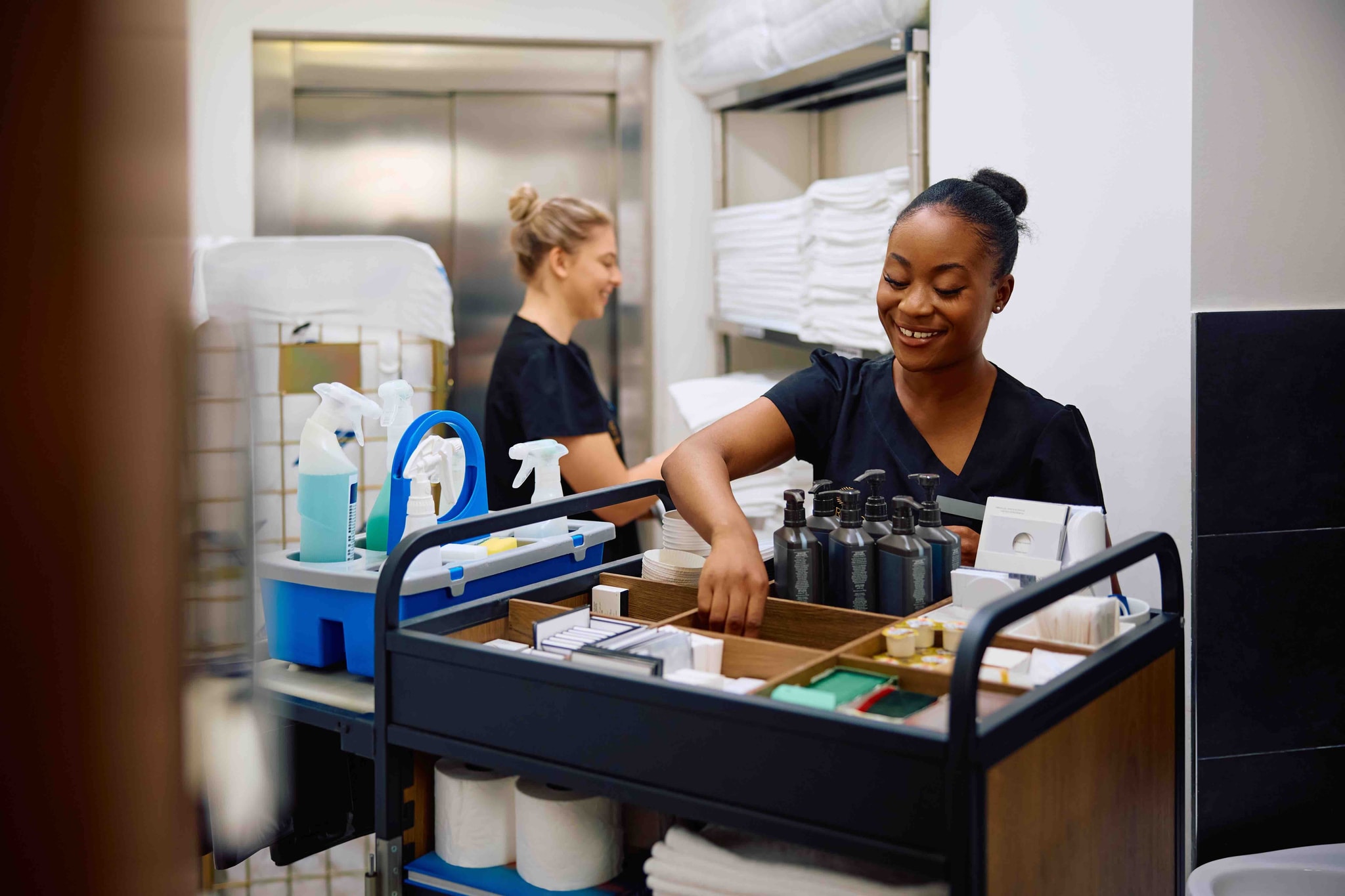
Add a vacuum when you can afford it. Keep everything neat in a caddy so you look organised when you arrive.
If you’re using taxis or walking, work close to home at first and group your jobs by area to save on transport. Before you buy anything, check prices at a local wholesaler and make a quick list of what you actually need now and what can wait.
Set pricing that makes sense
People charge differently depending on the job:
- Hourly rates for once-off cleans. Many cleaners charge between R120 and R250 per hour depending on the area.
- Flat rates for standard home cleans with add-ons like ovens, fridges or inside windows.
- Commercial or Airbnb pricing per visit or per month based on the size of the space and number of cleans.
Be clear about what’s included and what counts as an extra, so there’s no confusion later.
Keep your standards consistent
Your checklist becomes your reputation. Include the basics: kitchen, bathroom, floors, dusting, surfaces, bins. For rentals and offices, do a quick final scan for smudges, forgotten items and fingerprints.
Arrive on time, confirm instructions, and if the client is around when you finish, do a brief walk-through. It shows care and helps avoid callbacks.
Make it easy for people to book you
Your first clients usually come from people who already know you: neighbours, family friends, landlords, small offices, estate agents, Airbnb hosts or parents in local WhatsApp groups.
Share a clear WhatsApp message with your services, areas you cover and availability. Add two photos of your work if you have them. Start with one clear offer and one area you can reach easily. It’s much easier to build from a few good cleans than to promise every service to everyone.
You can also create a simple online presence, a Facebook page or Instagram account with your name, area and pricing.
If you want people to book without going back and forth on messages, a simple online booking or store setup can help. For example, iK Webstore lets clients choose packages, pick a time and pay upfront so your day runs smoother.
Make your quotes simple and to the point
You’ll notice quickly that most clients don’t want long breakdowns. They just want to know what you’re cleaning, roughly how long it will take and what they must pay. Keep it short and honest. It will save you and the client a lot of back-and-forth.
Something that helps is sending a quick confirmation message the day before. It sounds small, but it prevents last-minute no-shows and helps you look organised. People remember that.
Use payment and booking tools that make your day easier
If there’s one thing that wears cleaners down, it’s juggling bookings, payments and last-minute changes. WhatsApp is useful, but it can get messy once you’re dealing with regular clients, different addresses and repeat schedules.
A simple system helps. You want customers to book without a long back-and-forth, you want deposits or payments to be easy to confirm, and you want a record of what has been paid, especially when you start working with offices, landlords, body corporates or Airbnb hosts.
For cleaning and other service-based businesses, the right payment setup can help you take card or tap payments, send payment links for deposits, and keep a clearer record of what came in. It doesn’t need to be fancy. It just needs to make the day easier to manage.
Plan your day so it doesn’t run you
One thing you only learn once you start cleaning professionally is how quickly your day can get away from you. A job that looks small can end up taking half the morning, and before you know it, you’re late for the next place.
Most cleaners figure out their own rhythm. Heavy jobs early while you still have energy, quicker touch-ups in the afternoon, or the other way around if you’re using taxis. What matters is that your schedule feels doable.
Keep your kit light too. Carrying a bulky bag around flats, complexes or stairs feels fine at first and then hits you by lunchtime. And when clients ask for extras, have your add-on prices saved on your phone. It saves awkward guessing and helps you keep control of your time.
Keep track of your money from the start
When you’re starting out, it’s easy to forget what you charged someone last month or how much you made in a busy week. Write it down, even if it’s just in your notes app. Your jobs, your hours, your income, your cleaning products and your travel. After a few weeks, you’ll start seeing what’s worth your time and what isn’t.
As bookings grow, keeping simple records helps you price better, spot repeat clients and avoid guessing where your money went.
Professionalism starts before you walk through the door
Clients remember how you make the process feel. A quick message the night before. Arriving a little early so you’re not flustered. Wearing something neat. Greeting people properly. These things matter just as much as the clean bathroom or shiny floors.
If you’re planning to take on estate agents, complexes or offices, look into basic liability cover. It’s not for emergencies, it’s to help you win better jobs because it shows you’re serious.
Add help when the work becomes too much for one person
Most cleaners only think about hiring when they’re overwhelmed, but that’s usually when the quality starts slipping. The better time is when your schedule is full and you’re turning away work or missing good opportunities.
Start with help on your busiest days. Show them how you like things done. Check their work in the beginning. Quality doesn’t maintain itself; it needs attention.
Once you have steady demand, duplicate your kits and create a simple weekly plan so everyone knows where they’re going. Growth is exciting, but it works best when your team understands the standard you built your name on.
Realistic costs of starting a cleaning business
When it comes to costs, most new cleaners are surprised by how little they actually need to get going. If you’re focusing on home cleans or small spaces, most people start with somewhere between R2 000 and R5 000, depending on what they already have at home.
Here’s what that usually covers in real life:
- Basic kit like mops, decent cloths, scrub brushes and multipurpose cleaners. You can put this together for roughly R1 000 to R1 500 if you buy from a wholesaler instead of a supermarket.
- Consumables for your first month - detergents, bin liners and the things you’ll refill often. Around R300 to R600.
- A simple branded T-shirt or name badge, just so you look professional when you arrive. About R200 to R400.
- Transport money for taxis or petrol if you’re working in nearby suburbs or complexes. Usually R300 to R600 to get started.
- Optional extras like business cards if you want something to hand out. Expect R150 to R300.
Once you have those basics, you can serve your first clients without stressing about big upfront costs. Most cleaners reinvest slowly, buying a better vacuum, adding uniforms, or picking up a steamer when they start taking on offices or bigger rentals. That kind of work can push your setup cost closer to R10 000, but only when you’re ready for it.
The truth is, building a cleaning business is less about spending and more about consistency, smart reinvestment and keeping your money organised from the start. You grow as the work grows, not the other way around.
## Cleaning company checklist before you grow
Before you start calling it a full cleaning company, make sure the basics are in place:
- A clear list of services and prices
- A starter kit that matches the jobs you offer
- A simple booking process
- A way to take deposits or payments
- A record of your jobs, income and expenses
- A repeat-client plan
- A decision on whether to register formally
- Basic cover or support if you’re working in bigger homes, offices or estates
You don’t need all of this perfectly sorted on day one. But as the work grows, these small pieces help your cleaning business feel more organised and easier to manage.
A simple month to get yourself moving
If you’re the kind of person who likes structure, here’s a loose month-long plan that many new cleaners follow:
Week 1
Choose the type of cleaning you want to focus on, settle on a name, write a short description of what you offer, and put together your starter kit.
Week 2
Set up the basics online, a simple Facebook or Instagram page and a Google Maps listing. Send your intro message to people you trust and try to lock in your first one or two paid bookings.
Week 3
Do those jobs with your checklist, take photos if the client is comfortable, and ask for one referral per clean. Start tracking your income and expenses somewhere, even if it’s on your phone.
Week 4
Adjust your pricing if needed, add one optional extra to your services, and test a small repeat-booking special for clients you enjoyed working with. Confirm which payment method works best for you and keep your quoting message updated.
You won’t have everything figured out in a month, but you’ll be earning, learning and improving, which is the part that matters.
What new cleaners usually learn the hard way
Once you’ve done a few jobs, a few patterns start to show up. These aren’t big mistakes, they are just the things almost everyone figures out after their first month on the job:
Charging too little at the start
Most people undercut themselves in the beginning because they’re scared of losing the booking. But once a client gets used to your low rate, raising it becomes awkward. Start with a fair price that covers your time and travel.
Saying yes to everything
In the early days, every job feels important. But taking on all types of cleans at once drains your energy and makes planning difficult. Pick a lane first, build your routine, then add more as you go.
Not being clear about what you’re actually offering
Most misunderstandings come from assumptions. Clients think the fridge is included, you thought it wasn’t. Or they expect deep cleaning when you quoted for a standard clean. Clear boundaries save you time and protect your reputation.
Skipping the small check-ins
A quick confirmation the night before, a “thanks for today” message, these tiny moments turn once-off clients into regulars. It’s not overkill; it’s how people build trust.
Pushing your body harder than you realise
Cleaning is physical work, and you feel it after a long week. Keeping your kit light, spacing out heavy jobs and taking short breaks makes a massive difference. Your business depends on your body, so treat it like part of your equipment.
How to turn once-off cleans into regular clients
Once you’ve been cleaning for a bit, you start seeing which clients come back again and again. It’s rarely the fancy extras that win them over — it’s the small things. Arriving a little early. Checking in the night before. Remembering that their dog is scared of the vacuum. Noticing the fingerprints on the sliding door before they do.
People book cleaners they trust, and trust is built in the details.
Keeping a simple note of each client’s preferences helps more than you’d think. Preferred products, pets, access codes, how they like the beds made - those tiny touches make them feel looked after, and that’s what turns a once-off clean into a steady booking.
Bringing it all together
A cleaning business grows in small, steady moves: one good job, one happy client, one repeat booking at a time.
Start with a service you can do properly, price it clearly, keep your kit simple and track your money from the beginning. The more organised you are, the easier it becomes to spot what’s working and where to grow next.
The rest comes down to the way you show up. Arrive on time, clean properly, communicate clearly and make it easy for people to book you again.