How to Start a Business with No Money
Learn how to start a business with no money in South Africa by earning first, pre-selling services, and validating demand before you spend. Practical, realistic steps for getting paid from day one.
Table of Contents
- Introduction
- What “no money” really means
- Start with what you already have
- Choose a model that brings cash in early
- Keep your first costs low
- Use free tools without overbuilding
- Get your first paying customer before you spend more
- Watch the hidden costs
- Use your first income carefully
- Know when to formalise
- Make it easy for people to pay you
- Keep the next step practical
- FAQs about starting a business with no money in South Africa
- Can I really start a business with no money in South Africa?
- What is the best business to start with no money?
- How do I get customers without spending on ads?
- Should I register my business before making money?
- What costs should I expect even if I start lean?
- How can I accept payments without a card machine?
Learning how to start a business with no money in South Africa is really about reducing upfront risk. It does not mean the business will cost nothing forever. It means you avoid big expenses too early, use what you already have, test demand first and let your first sales help fund the next step.
That matters because many people delay their business idea because they think they need a shop, stock, a website, equipment, branding and a full setup before they can sell anything. For some businesses, those things can come later. In the beginning, the priority is simpler: find a problem you can solve, offer something people will pay for, and keep your first costs as low as possible.
This guide focuses on the lean-start phase. If you are ready to think beyond that first phase, it helps to understand the practical steps that sit around your business idea, from structure and registration to tax, payments and first customers.
What “no money” really means
A no-money business is not a business with no costs at all. There is almost always some cost involved, even if it is data, transport, ingredients, airtime, packaging, printing, cleaning supplies or time away from other work.
In this context, “no money” means you avoid the heavy costs that can make a business difficult before it has made a sale. That includes things like renting premises too early, buying too much stock, paying for expensive branding, signing up for tools you do not need yet, or building a website before you have proven demand.
A lean start usually means:
- using skills, tools or contacts you already have
- selling a service before buying stock
- taking pre-orders before producing in bulk
- using free channels like WhatsApp, referrals and social media
- keeping your offer simple enough to test quickly
- using the first income to pay for the next practical step
You don’t need to look like a big business on day one. You need a version that is simple enough to test, run and improve.
Start with what you already have
The easiest business to start with little or no money is often built around something you already know how to do. That could be baking, tutoring, cleaning, doing hair, taking photos, fixing phones, designing flyers, managing social media, doing admin, helping with deliveries or selling products through your existing network.
Start by looking at your current skills, your available time, the people around you and the tools you already own. A smartphone, WhatsApp, a basic spreadsheet, transport money and a clear offer can be enough to test many service-based ideas.
This is where service businesses often work better than product businesses. A product usually needs stock before you sell. A service can sometimes be sold with your time, skill and a simple way to communicate with customers.
For example, a tutor can start with one learner before creating a full tutoring brand. A cleaner can start with one weekly client before buying extra supplies. A designer can start with basic social media artwork before investing in paid software. A home baker can take paid orders before buying ingredients in bulk.
If you are still deciding what to offer, look through these beginner-friendly business ideas and choose something that fits your skills, budget and local demand.
Choose a model that brings cash in early
When money is tight, the business model matters. You need a way to earn before you spend too much.
Service-first businesses are usually the easiest place to start. You sell your time or skill, get paid, then use that income to improve the business. Cleaning, tutoring, beauty services, freelance design, photography, admin support, repairs and consulting can all work this way.
Pre-selling is another useful route. Instead of buying stock first and hoping people buy it later, you collect orders before committing to the cost. This can work for baked goods, personalised items, event platters, clothing, crafts or small-batch products.
You can also start by connecting buyers and sellers. For example, you might help local customers find a product, arrange delivery, or package a service using suppliers you already know. This keeps your role clear without forcing you to carry too much stock upfront.
The point is to avoid locking money into things you have not tested. Your first version should help you answer one simple question: will people pay for this?
Keep your first costs low
Even a lean business needs a few basics. The trick is knowing what you truly need before your first sale and what can wait.
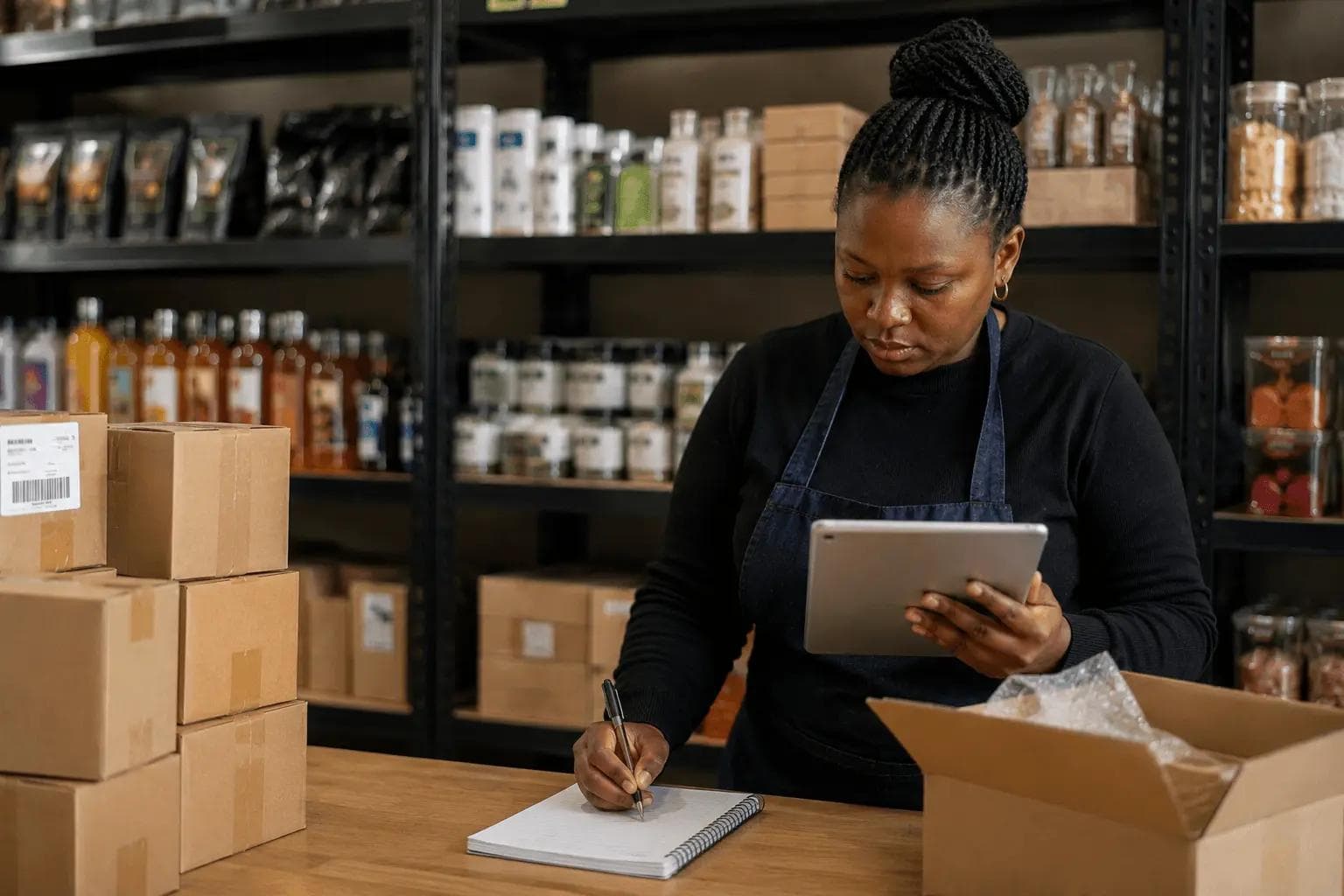
A home-based baker may need ingredients, packaging and a way to take orders. A cleaner may need transport, basic supplies and a booking process. A mobile beauty business may need stock, clean tools and appointment confirmations. A freelancer may need data, a portfolio and a simple invoice template.
You probably do not need a paid logo, branded packaging, a full website, bulk stock, office space or paid ads in the beginning. Those things can come later if the business proves itself.
Here is a simple way to think about your first costs:
| Starting route | Keep costs low by... | Watch out for... |
|---|---|---|
| Service business | Using skills and tools you already have | Transport, data and supplies |
| Pre-order product | Taking orders before buying stock | Refunds, delivery delays and clear timelines |
| Reselling | Starting with a small range | Slow-moving stock |
| Home-based food | Making to order | Packaging, food safety and ingredient costs |
| Digital service | Using free tools first | Time, data and software limits |
| Local delivery or errands | Starting in one area | Fuel, transport and time |
If you have a small amount to work with, these businesses you can start with R1000 can help you think through what to buy first and what to leave for later. You can also compare more low-cost business ideas in South Africa if you want options with lower upfront pressure.
Use free tools without overbuilding
Free tools can help you get moving, but too many tools can slow you down.
WhatsApp Business is often one of the most useful places to start. You can add your business name, trading hours, quick replies, product photos and a basic catalogue. It works well for local services, food orders, beauty bookings, deliveries and small product sales.
Social media can help too, especially if your customers already spend time on Facebook, Instagram, TikTok or community groups. You do not need to post every day or act like a big brand. Show what you sell, explain how to order, share proof of your work and make it easy for people to contact you.
A simple spreadsheet can help you track orders, costs, money received, money owed and customer details. This is not glamorous, but it matters. Messy records make it harder to know if the business is working.
Free tools are useful when they support sales, service or admin. They become a distraction when you spend more time setting them up than speaking to customers.
Get your first paying customer before you spend more
Your first customer does not need to come from a perfect campaign. In many South African businesses, the first few sales come from people nearby, friends of friends, neighbours, colleagues, church groups, school groups, WhatsApp contacts or community referrals.
Start with a clear offer. People should quickly understand what you do, who it is for and how to buy.
Instead of saying, “I do baking,” say, “I bake birthday cupcakes for kids’ parties in Durban North.” Instead of saying, “I do cleaning,” say, “I offer once-off deep cleaning for flats and small offices in Randburg.” The clearer your offer is, the easier it is for people to remember and recommend you.
Ask for one sale, not a full business launch. Offer a trial service, a limited batch, a weekend booking or a small package. After the first sale, ask what worked, what was unclear and what would make the customer buy again.
That feedback is more useful than guessing. It tells you what people value, what they are willing to pay and what needs to change before you spend more money.
Watch the hidden costs
A business that looks free can still become expensive if you ignore the small costs.
Data, airtime, transport, packaging, bank fees, delivery fees, electricity, cleaning supplies, printing, returns and refunds can all eat into your money. Even taxi fare, data bundles and packaging can change your profit if you forget to include them.
Write down every cost, even the small ones. If you use your own car, add transport. If you use your own data, add data. If you use your own kitchen, tools or electricity, make a note of what the business depends on.
This helps you price properly. It also helps you see when a business idea is taking more money than it brings in.
A simple rule helps: before you spend on anything new, ask how it will help you make sales, deliver better, save time or avoid a real problem. If it does not do one of those things, it can probably wait.
Use your first income carefully
The first money you make can feel exciting, but it disappears quickly if you spend without a plan.
Use early income to strengthen the parts of the business that already work. That might mean better packaging, more reliable transport, basic equipment, extra stock for proven products, a cleaner booking process or a payment option that makes life easier for customers.
Avoid spending your first income on things that only make the business look more established. A nice logo or branded photoshoot can wait if your biggest problem is late payments, stock shortages or transport costs.
Put some money aside too. Even a small reserve can help when a supplier price changes, a customer pays late, or you need to replace something quickly.
The early stage is about learning what the business needs in real life, not what it looks like in your head.
Know when to formalise
You do not always need to register a company before you make your first sale. Many solo traders begin with a simple setup while they test demand, especially in low-risk service businesses.
That said, you still need to take records and tax seriously. If money is coming in, keep track of it. If the business starts trading regularly, becomes more visible, works with larger clients, takes on more risk or needs supplier accounts, it may be time to think about a more formal setup.
If you are working alone and keeping things simple, read more about setting up as a sole proprietor. If the business is becoming more established, this guide on when to register your business can help you decide what comes next.
Formalising should support the business, not distract from it. Register when there is a clear reason, like bigger clients, tenders, funding, supplier agreements, staff, partners or risk that needs a cleaner structure.
Make it easy for people to pay you
When money is tight, waiting for payments can put pressure on the whole business. A customer who wants to buy should not have to work hard to pay you.
Cash is still common, but it can be risky and hard to track. EFTs can work, although they may slow things down if you need to wait for proof of payment. For WhatsApp, social media or remote orders, it may be easier to send customers a payment link so they can pay without needing cash or a card machine.
You do not need every payment option from the beginning. Choose what fits how you sell right now, then add more as the business grows.
The important thing is to keep payment simple, clear and easy to record. That helps your cash flow, your customer experience and your admin.
Keep the next step practical
Starting with little or no money means you need to be careful, but it does not mean you need to wait forever.
Start with one clear offer. Find one real customer. Track what it costs to deliver. Keep your records clean. Use free tools where they help. Spend only when the business has shown you what it needs next.
The more you speak to real customers, the less you have to guess. Their questions, complaints, orders and repeat purchases will tell you what people value and what needs to change.
You do not need to build the whole business at once. You need a clear enough version to test, sell, learn and improve.
FAQs about starting a business with no money in South Africa
Can I really start a business with no money in South Africa?
You can start some types of businesses with very little upfront money, especially service-based businesses that use skills, tools or contacts you already have. It is better to think of it as starting lean rather than starting for free. There will still be costs like data, transport, supplies, packaging or time.
What is the best business to start with no money?
Service businesses are often easier to start with little money because you can sell your time or skill before buying stock. Cleaning, tutoring, freelance work, beauty services, repairs, photography, admin support and social media help are examples that can begin with a simple setup.
How do I get customers without spending on ads?
Start with people who already know you or are close to your community. Use WhatsApp, referrals, local groups, Facebook Marketplace, community pages and word of mouth. Be clear about what you offer, who it helps and how people can order or book.
Should I register my business before making money?
Not always. Some people test demand first, especially when they are trading alone or offering a simple service. Registration becomes more useful when the business grows, works with larger clients, takes on risk, applies for funding or needs a formal structure.
What costs should I expect even if I start lean?
Common early costs include data, airtime, transport, packaging, ingredients, supplies, electricity, delivery, bank fees and basic tools. Track these from the beginning so you know what the business really costs to run.
How can I accept payments without a card machine?
If you sell remotely or through WhatsApp, SMS, email or social media, a payment link can help customers pay without needing cash or a card machine. If you sell in person often, you can add a card machine or contactless payment option later when it makes sense.