How to Choose the Right Ecommerce Platform for Your Business
Ready to choose an ecommerce platform for your business? This is your guide to help the decision-making process and get your business ready in no time!
Table of Contents
- Introduction
- The purpose of an ecommerce platform
- Six things to check before you commit
- 1. Support that actually answers when something breaks
- 2. The provider knows your kind of business
- 3. It can grow without forcing a rebuild
- 4. It works properly on a phone
- 5. It plays nicely with search
- 6. It keeps payments safe
- The platforms worth looking at
- You don't have to choose between us and them
- So which one should you pick?
Moving your business online usually comes down to one decision you can't easily undo later: the ecommerce platform you build everything on. Get it right and the rest feels manageable. Get it wrong and you spend the next year fighting your own setup instead of selling.
The demand is definitely there. Roughly a fifth of South Africans now shop online, and the market is growing close to 10% a year. People are buying from their phones during the lunch break, late at night, in queues. The harder part is picking the platform that fits how you run your business, not the one a slick sales page tells you to pick.
Here's how to think it through without losing a weekend to comparison tables.
The purpose of an ecommerce platform
An ecommerce platform is the software your online shop runs on. It handles the product pages, the cart, the checkout, the payment, and the admin side where you manage orders and stock. Think of it like the foundation of a building. You don't see most of it once you're trading, but everything else sits on top of it.
Some platforms are fully hosted, which means you pay a fee and the provider takes care of the technical maintenance. Others you host and manage yourself, which gives you more control and a lot more responsibility. For most small businesses starting out, hosted is the sane choice. You really don't want to be patching a server at 11pm when stock has finally landed and you're trying to get it listed.
Most people starting out don't need to host their own anything. That comes later, if ever.
Six things to check before you commit
Picking an ecommerce platform isn't a decision to rush. It sets the tone for how your shop runs day to day, so it's worth slowing down on these six.
1. Support that actually answers when something breaks
IT problems never arrive at a convenient time. They show up on a Friday afternoon near month-end, right when sales should be coming in. So before you sign up anywhere, find out what their support looks like. Do they offer help around the clock or only office hours? Can you reach a person by chat, email and phone, or is it one slow channel?
The honest way to gauge this is to read reviews from other merchants. Look past the marketing and check what people say about wait times and if anyone actually solved their problem. A platform with a beautiful storefront and a support queue that takes three days is a problem waiting to happen.
2. The provider knows your kind of business
Plenty of platforms can build a basic shop. Fewer understand what your specific business needs as it grows. Has anyone in your industry used them and stuck around? Can they handle more than the basics once you start adding products, payment options or delivery rules?
You want a provider whose offering lines up with where you are now and where you're trying to get to. Cheap and limited feels fine in month one. It feels very different the day you need something it simply can't do.
3. It can grow without forcing a rebuild
Your shop will probably look different six months from now. You might add a product line, start shipping nationally, or pick up a wholesale client out of nowhere. The platform you choose today needs to handle that without you starting over.
A lot of new shop owners learn this the hard way. They pick something cheap and cheerful, outgrow it within a few months, then spend a brutal week migrating their whole catalogue by hand. Scalability sounds like a buzzword until you're the one stuck re-uploading 300 products.
4. It works properly on a phone
Most South Africans shop on their phones, full stop. If your checkout is clumsy on a small screen, you lose the sale and you usually never know it happened. People don't email to complain that buying was annoying. They just close the tab.
So test it yourself on your own phone before you commit. Add a product to the cart. Try to pay. If it's fiddly or slow for you, it's worse for a customer who has zero patience and three other tabs open.
5. It plays nicely with search
If people can't find your shop, the rest doesn't matter much. Good SEO starts with the platform giving you the basics: your own domain name, a blog you can actually grow, clean URLs, and space for customer reviews. Search engines lean on all of that to figure out who you are and how much traffic to send you.
Quick rule of thumb: any platform that won't let you use your own domain or add real content is going to make getting found a lot harder than it needs to be.
6. It keeps payments safe
Selling online means accepting card payments, and that means handling sensitive customer information. Your customers are trusting you with their card details. The platform and payment setup you choose is what makes that trust safe or risky.
Before settling on anyone, check their security track record and find out if their systems get audited regularly. You want a setup that gets checked, patched and improved over time, not one that quietly hopes for the best.
The platforms worth looking at
Once you know what to look for, the shortlist gets shorter. Here are the options most South African businesses actually weigh up, with the honest version of what each one is good for.
- WooCommerce runs on WordPress and is very flexible, but it expects you to be reasonably hands-on or willing to pay someone who is.
- Shopify is genuinely easy to get going on, with monthly fees billed in dollars, so the cost moves with the rand.
- Wix is popular here for its simplicity and is fine for smaller catalogues and service businesses.
- Shopstar is built for the local market, which helps with things like local shipping and support.
- Adobe Commerce (the old Magento) is powerful, but it's built for big operations with developers on hand. For most small businesses it's overkill.
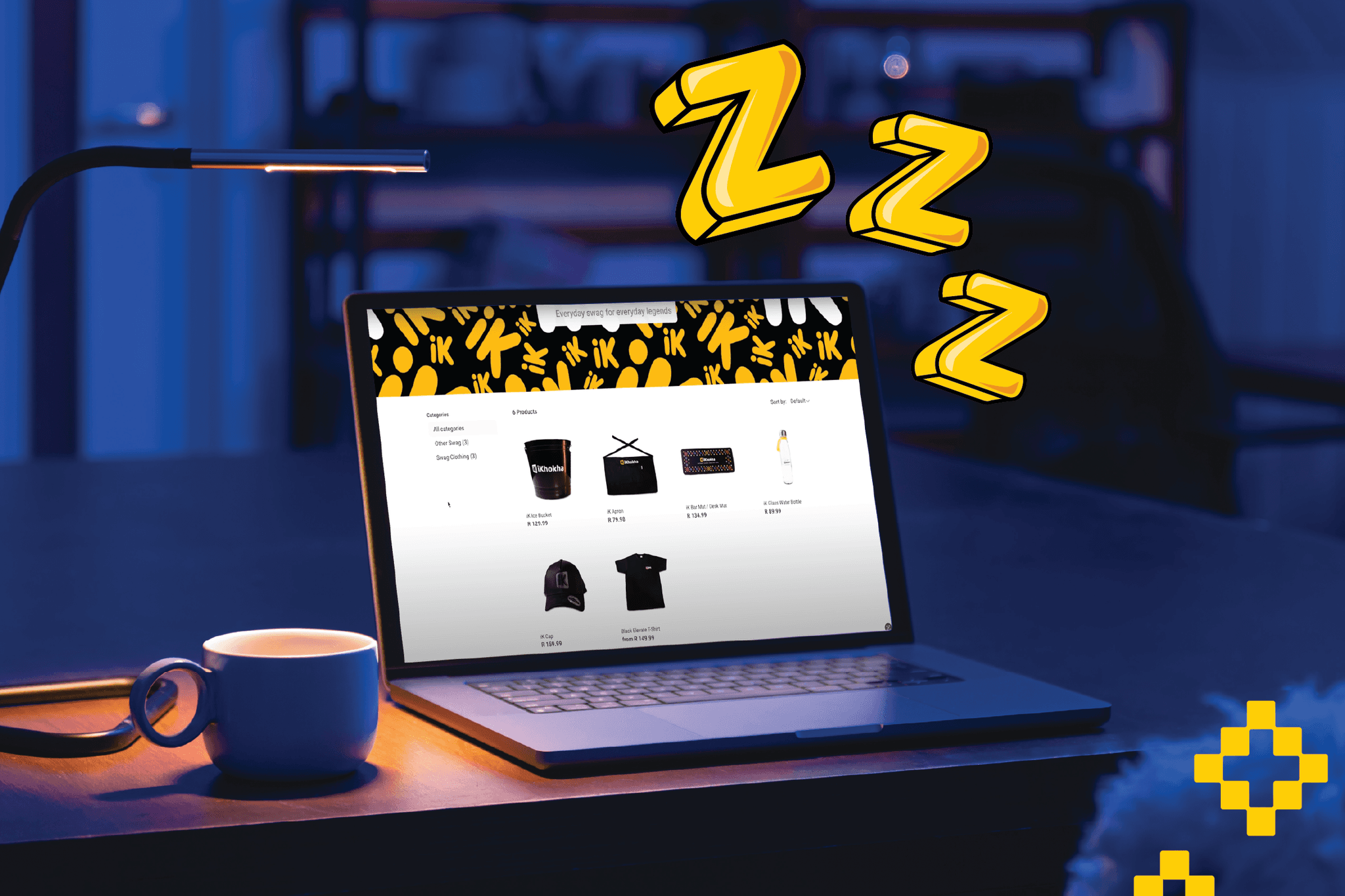
And then there's us. If you want to skip the setup headache entirely, you can build a free online store with us using iK Webstore. It's a single-page store you set up through a simple step-by-step wizard, no coding and no technical skills needed. You can add as many products or services as you like, set up delivery or collection, then share the link straight to WhatsApp, social media or a QR code.
The part that matters for a working business: your iK Webstore sales sync with your card machine sales in your iK Dashboard, so your online and in-person trading sit in one place. And it's free to run, with no monthly fee. You only pay when you actually make a sale.
We'll be straight with you about what it is. iK Webstore is built to get you selling fast, not to run a 5,000-product warehouse operation. If you're starting out, or testing if online selling even works for your kind of stock, that's exactly the point. You get live, you start trading, you learn what your customers want before you spend money on anything heavier.
You don't have to choose between us and them
Here's something most of these comparisons skip. The platform you sell on and the way you get paid are two separate decisions.
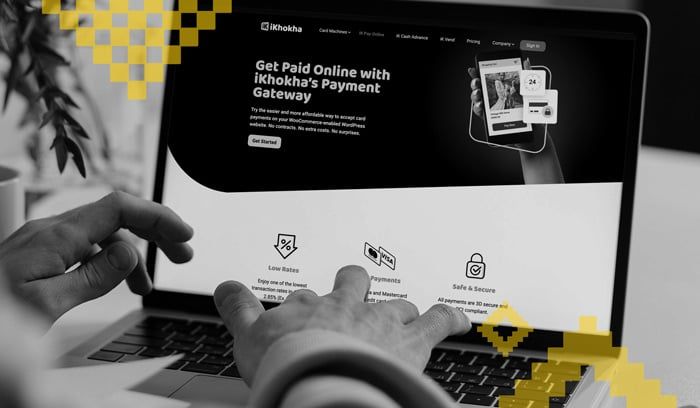
So if you've already got your heart set on Shopify or WooCommerce, that's completely fine. We'd rather get you paid than talk you out of it. You can accept payments on your own site with iK Pay Gateway, or drop our plugins straight into a Wix, Woo or Shopstar store. Either way, the money lands with us and you keep the platform you like.
That's the bit worth holding onto: you're not locked into one ecosystem. Build where it suits you, and let us handle getting you paid.
So which one should you pick?
There's no single best ecommerce platform sitting at the top of some list. There's the one that matches your stock, your budget and how much tech you're willing to deal with. A service business with ten offerings has very different needs to someone shifting hundreds of physical products a month.
Start with what gets you live and selling. You can always grow into something heavier once you've proven the demand and you actually need the extra features. Far too many businesses overthink this part and lose months they could have spent learning what their customers want.
The shop that's open and taking orders beats the perfect shop you're still planning. Pick something solid, get it live, and start trading.