When Does It Make Sense to Use Your Phone as a Card Machine?
Is using your phone as a card machine right for your business? Learn which South African sellers benefit most from tap on phone setups and when they work best.
BY Sarah Heron
Table of Contents
- Introduction
- Why some businesses prefer to trade without extra hardware
- When it makes sense to use your phone as a card machine
- The types of businesses that benefit most
- Market traders and pop-up sellers
- Mobile service professionals
- Delivery services
- Personal care and beauty
- Why mobility is the main reason to choose this setup
- Practical benefits in day-to-day trade
- What to think about before choosing this option
- When a phone setup might not be enough
- Choosing the right setup for your business
In the past, accepting card payments usually meant buying a dedicated device. While mobile card machines have become much more common and affordable, there is now an even simpler way to trade.
Many South African business owners are choosing to use their smartphones to take payments. It is a setup that removes the need for extra hardware, charging cables, and carrying cases. But while the idea of a customer tapping their card directly onto your phone is convenient, it is worth looking at whether it actually suits the way you work.
Using your phone as a card machine is about more than just the tech. It is about how you move, where you sell, and how much gear you want to manage during a busy day.
Why some businesses prefer to trade without extra hardware
For many small business owners, keeping things simple is a priority. If you are a mobile professional, your hands and your vehicle are often already full of the tools you need for the job. Adding a separate card reader, even a small one, is one more thing to remember to charge, one more thing to pack, and one more thing that could get left behind.
There is also the benefit of having everything in one place. Most owners already run their business from their phone. You use it to WhatsApp customers, check your bank balance, and find your way to your next appointment. Using that same device to take a payment already fits how many people run their business. It keeps your workspace clear and lets you focus on the customer instead of the equipment.
When it makes sense to use your phone as a card machine
Using a smartphone to take payments is most practical when your business values mobility.
It makes sense if you don't have a fixed counter or a permanent spot to check out customers. If you are often taking payments in car parks, on street corners, or at a customer’s house, your phone is the most convenient tool you have.
It also suits businesses with sales that aren't always predictable. Perhaps you don't sell every day, or you only trade at specific weekend events. In these cases, you might not want a dedicated device sitting in a drawer for most of the month. Having the capability on your phone means you are always ready to take a card payment, even if a sale happens unexpectedly while you are out and about.
The types of businesses that benefit most
Certain industries in South Africa are a natural fit for phone-based payments because of how they operate day-to-day.
Market traders and pop-up sellers
If you spend your Saturdays at local craft or food markets, space is usually tight. Your stall is packed with stock and you often only have a small table to work from. Using your phone as a card machine means you have one less device taking up room. It also makes it easier to take a payment while you are standing in front of your stall chatting to customers, rather than having to reach behind a counter for a machine.
At a busy market, things can get a bit chaotic. You might be helping one person with a fitting while another wants to pay for a gift. Having your phone in your pocket means you can process that sale wherever you are standing. You don't have to navigate back to a specific spot to find your card machine, which helps keep the flow of your stall moving.
Mobile service professionals
Plumbers, electricians, and mobile car washers are always on the move. When the job is done, you want to get paid there and then. Using your phone to let a customer tap and pay is fast and professional. It also means you don't have to head back to your van to find a card reader once the work is finished.
For these professionals, it’s also about safety and convenience. Carrying less equipment into a customer’s home or onto a job site is simply easier. You already have your phone on you for navigation and communication, so it makes sense to use it for the final step of the job too.
Delivery services
Whether you are delivering meals or furniture, your hands are usually busy. A phone-based setup is useful because the device is already in your pocket. It simplifies the hand-over and means you aren't carrying extra equipment around while making deliveries.
In a delivery setting, speed is everything. You want to get the package to the customer, take the payment, and move on to your next stop. Using your phone to accept a tap payment is often quicker than fumbling with a separate device, especially if you are balancing a delivery in one hand.
Personal care and beauty
Mobile hairdressers, nail technicians, and therapists who visit clients at home benefit from the simplicity of a phone payment. It keeps the interaction relaxed and fits the informal feel of a home-based service. It also means one less delicate piece of electronics to pack into your kit bag alongside your brushes, polishes, or oils.
Why mobility is the main reason to choose this setup
One of the main reasons this works for mobile businesses is that there is less to prepare. Dedicated card machines are great, but they are an extra item to manage. You have to ensure they are kept charged throughout the day and that they are connected to your phone or the network correctly.
When you use your phone as a card reader, you are using a device that you already keep charged and connected. If your phone has enough battery and a stable internet connection, you are ready to take a payment. This is helpful when you are trading in different locations every day where you might not have access to a power point or reliable Wi-Fi.
Practical benefits in day-to-day trade
Think about a busy morning at a food stall. You have a queue, and you need to serve people as quickly as you can. In this setting, tapping a card on a phone is a fast way to handle a transaction. Most customers are already used to tapping their cards or their own phones to pay at larger shops, so doing it on your phone feels familiar to them.
It also helps with record-keeping. Most apps that let you use your phone as a card machine will keep a digital history of your sales. You can then send a receipt via SMS or email directly from your screen. This means no paper rolls to buy and no lost paper slips at the end of the day.
What to think about before choosing this option
While it is a handy tool, there are a few practical points to keep in mind:
- Battery life: Your phone is now doing more work. If you are at a long event, you might need a power bank to make sure your phone doesn't run out of power before the day is over. It’s a good idea to monitor your battery levels during peak trading times.
- Keeping your phone safe: Since you will be holding your phone out for customers to tap, it is a good idea to have a sturdy cover to protect it from any accidental drops. You’re using your personal or primary business phone, so protecting that screen is a priority.
- How customers react: Some customers might be surprised to tap a phone at first, though this is becoming much more common across South Africa. Being able to explain briefly that it's a secure way to pay can help put them at ease.
- The tap technology: For your phone to take payments, it needs to have NFC (Near Field Communication) technology. This is the same technology that allows for contactless payments. Most modern Android phones have this, but you should check your phone’s settings to be sure it is turned on.
When a phone setup might not be enough
As a business grows, your needs might change. If you open a permanent shop with a dedicated counter, you might eventually prefer a standalone card machine that stays in one place.
In a very busy environment—like a cafe where you are processing a sale every minute—a dedicated machine can sometimes be more practical. It is built specifically for high-volume tapping and can be more robust for constant use. It also frees up your phone so you can use it for other tasks, like taking orders, managing your schedule, or even playing music for your shop, while a staff member handles the payments on the separate device.
Also, if you have staff, you might not want them using their personal phones for your business sales. In that case, providing them with their own card machines is usually the better route. It keeps business and personal lives separate and ensures you have a dedicated tool for each person on your team.
Choosing the right setup for your business
Deciding how to take payments is about finding what makes your work day easier. If your business is mobile, you value having less gear to carry, and you want to stay as flexible as possible, then using your phone as a card machine is a practical choice.
It is also a great way for new businesses to start taking card payments without a large upfront investment. As you grow, you can always re-evaluate and move to a more traditional card machine setup if your volume increases or you move into a fixed retail space.
It helps you stay ready to take a payment without carrying extra equipment. If this setup sounds like it fits the way you trade, you can look into iK Tap on Phone. It is one option for South African business owners who want to take card payments on their phone.
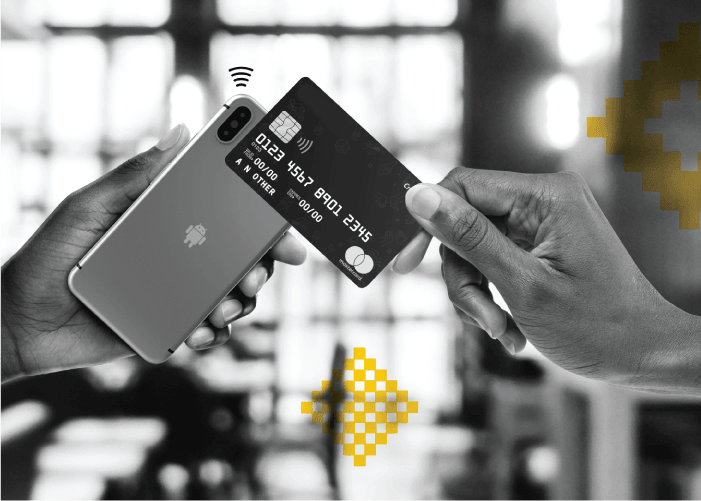
When you’re ready to transact, type in the amount you’re charging and bring your customer’s card to the back of your smartphone. Wait for the tick, and boom, you just got paid!
Related Articles


Most recent articles
View all
8 Common Stock Mistakes SMEs Make (And How to Fix Them)
Business Ideas in Rural Areas in South Africa

Holmes Brothers: From Garage Chaos to a South African Surf-Lifestyle Brand
5 Modern Business Ideas for Women in South Africa

Low-Risk Business Ideas That Bring Steady Work

12 Unique Business Ideas in South Africa for 2026

8 Money Management Tips for South African Small Business Owners
How to Open a Bar in South Africa: Your Complete Step-by-Step Guide

5 Business Management Must-Haves for an Investable Business

How to Start a Gardening Business in South Africa

5 Time Management Tips for Better Business Management

How to Start a Cleaning Business in South Africa

A different way to live: This is Kico Life

How to Launch an Online Store in Just 3 Steps
How to Start a Car Wash Business in South Africa
Making the Leap: The Website-Free Way to Sell Online
How to Start a Laundry Business in South Africa